
The Installer Report
When a PPF Handoff Fails, the Install Is No Longer the Story
A fast-moving owner complaint shows why photographs, panel maps, escalation rules, and a disciplined delivery inspection are now core production systems for PPF shops.
By : Installer Report Desk
Illustration by Installer Report
A PPF install can look excellent and still end as a reputation failure.
A fast-moving r/AutoDetailing post illustrates the risk. The vehicle owner alleged that, after a paint-protection-film and ceramic-tint job, a later inspection revealed damaged exterior badges, paint chips, and cutting damage near a reflector. The owner also said the shop offered corrective work.
Those claims are unverified allegations in a developing customer dispute. Installer Report has not independently inspected the vehicle, reviewed the work order, or obtained the shop's response. The thread is useful not as a verdict, but as a case study in what happens when the customer and shop no longer share the same record of the car.
The failure point is the evidence gap
When an owner finds damage after delivery, both sides immediately confront the same questions:
- Was the condition present at intake?
- Was the part removed during installation?
- Who approved removal or replacement?
- Did the customer inspect the vehicle at pickup?
- What correction was offered, by whom, and on what timeline?
If the answers live in memory, private text messages, or a camera roll nobody indexed, the public argument becomes the record.
The correct operational response begins before the vehicle enters the bay.
A defensible intake takes minutes
A proper intake does not need a forensic lab. It needs consistency.
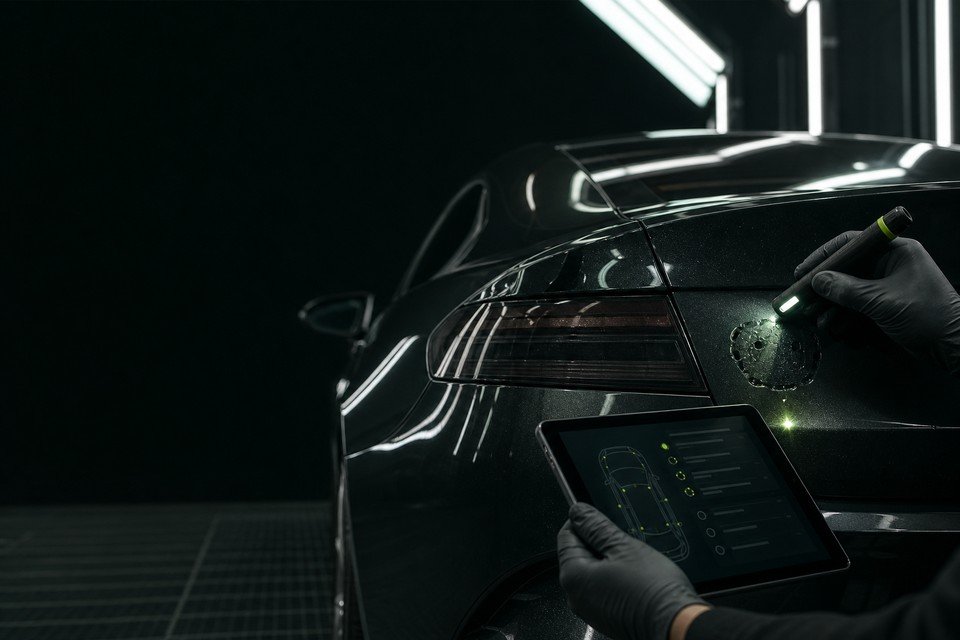
Photograph every panel in wide and close views. Capture badges, trim, reflectors, door edges, repainted panels, existing chips, and any part the installer may remove. Store the images against the job number, not an employee's personal phone. Add a simple panel map with annotations for pre-existing damage.
For high-value or modified vehicles, record a slow walkaround video with the owner present. The purpose is not to trap the customer. It is to give both parties the same baseline.
Removal must create a chain of custody
Badges, cameras, reflectors, trim pieces, and sensors should not disappear into an anonymous parts tray.
A shop's work order should identify:
| Control | Minimum record | | --- | --- | | Part removal | Component, technician, time, condition | | Storage | Labeled container tied to the job | | Reinstallation | Technician and completion check | | Damage found | Photo, manager review, customer notice | | Replacement | Part number, approval, expected date |
If a component breaks, the first contact should come from the shop - before the customer discovers it. Early disclosure is cheaper than surprise.
Delivery is a production step
Many shops treat delivery as a payment event. It should be the final QC gate.
Move the vehicle into neutral daylight or a controlled inspection lane. Walk the customer around it. Verify removed parts, edges, cut lines, paint condition, cameras, sensors, windows, locks, and lights. Note cure-related effects separately from permanent defects. Then record acceptance and any open correction items.
This is not a waiver of legitimate workmanship claims. It is a shared observation at a defined moment.
Free extras do not replace a remedy
In the Reddit thread, the owner described an offered cosmetic add-on alongside repair discussions. We cannot verify the exchange, but the sequence exposes a common mistake: using a free upgrade to soften a defect complaint.
Customers generally want four things first:
- A clear acknowledgment of what the shop accepts responsibility for.
- A specific corrective plan.
- A completion date.
- Written confirmation that the correction will not reduce their warranty rights.
A gift may help after those steps. Before them, it can read as deflection.
Build an escalation clock
The internet moves faster than most shop meetings. A dispute that waits until Monday can collect thousands of views over a weekend.
Set internal response targets:
- Within one business hour: acknowledge the complaint and preserve job records.
- Same day: assign one manager and schedule an inspection.
- Within 24 hours of inspection: provide the proposed remedy in writing.
- Until closure: update the customer even when parts or outside vendors cause delay.
Do not argue technical details in public before inspecting the vehicle. A concise public response can confirm contact, state that the shop is reviewing the job, and invite the customer into a documented process.
The operator takeaway
The most important question is not whether every online allegation is accurate. It is whether your system could establish what happened if the same accusation landed tomorrow.
A premium PPF price buys more than film and labor. It buys confidence that the vehicle will be documented, protected, inspected, and corrected transparently if something goes wrong.
Editorial status and source note
This article is an editorial analysis based on a public dispute thread. It does not make a finding about the shop or vehicle involved. Social source: r/AutoDetailing - "PPF install damaged my car", accessed August 4, 2026.
Related reports
 PPFGlobal
PPF Doesn’t End at Installation: The Removal Bill Owners Forget
Paint protection film is sold as a decade-long shield — but warranties cover manufacturing defects, not the full cost of ownership. Removal, reapplication, and shop labor often sit outside what customers assume is ‘covered.’
 PPFGlobal
Avery Dennison PrismaPro Puts Color PPF on a Dry-Apply Clock
PrismaPro launches as 8.5-mil color TPU with IntelliTack dry apply, a 10-year vertical warranty story, and July installer training with a free roll. Here’s what shops should change in quoting this week.
 IndustryGlobal
Iowa’s 50% Front-Side Tint Law Is Live: The Shop Quoting Playbook After HF 766
House File 766 dropped Iowa’s front-side VLT floor from ~70% to 50% on July 1, 2026. Windshield stays 70%. Here’s how Des Moines-to-Davenport shops should quote, meter, and sell without getting customers ticketed.
Get the weekly briefing operators actually read.